0%
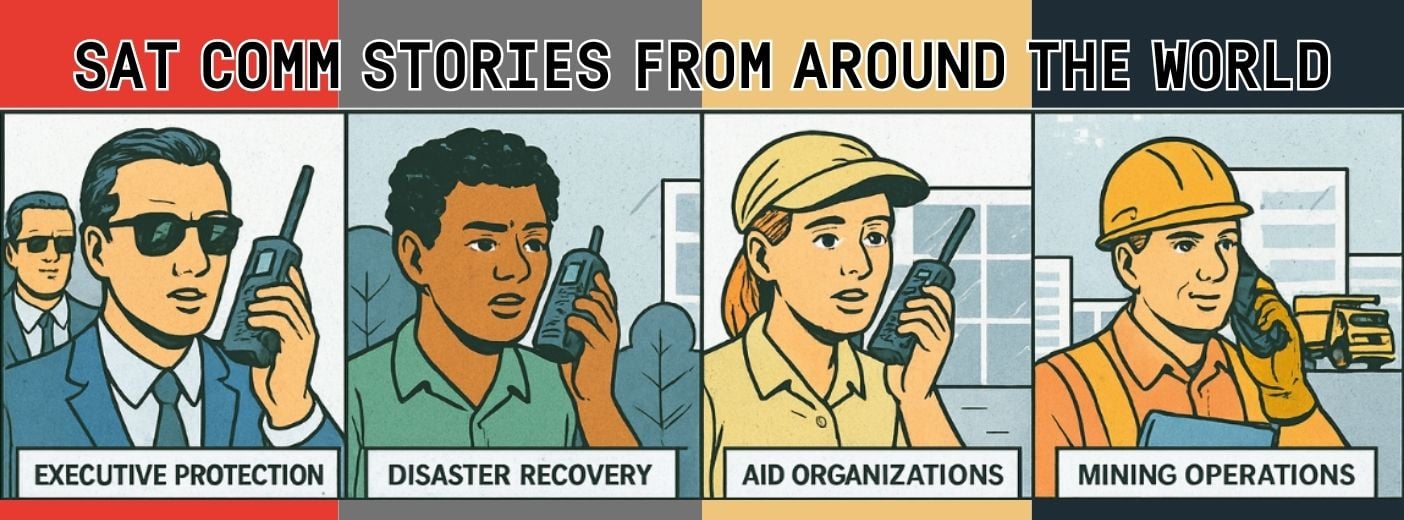
The technical specifications of a satellite phone—its IP rating, battery life, and network latency—are just numbers on a page. They only take on meaning when placed in the hands of a person facing a moment of profound disconnection. The true measure of this tech isn't in its features, but in the real-life scenarios that it enables: the call for rescue from a frozen cliffside, the business deal closed from a platform in the middle of the sea, the simple "I'm safe" message sent from the heart of a disaster zone - all require sat phone services.
The satellite communication market is expanding rapidly for this very reason. Valued at nearly a billion dollars in 2024, it's on a steady climb, projected to reach $1.31 billion by 2033 as more people recognize the fragility of our terrestrial networks. This growth is driven by real-world needs, a fact starkly illustrated by the 387 natural disasters in 2022 that severed conventional communication lines for 185 million people worldwide.
To understand which solution is truly "best," we must look beyond the spec sheets and into the lives of those who depend on them. These are the portraits from the edge, case studies of individuals who ventured beyond the grid and the critical choices they made to stay connected.
True-Story Classic: “My Sat Phone Saved Me from Freezing to Death” - SPS True Stories
Case-Story 1: The Alpinist
Name: Leo, a 38-year-old alpinist and photographer
The Scenario: Leo was planning a three-week solo expedition to climb a series of unclimbed peaks in a remote corner of Canada's Yukon Territory. For 21 days, he would be completely alone, hundreds of miles from the nearest road or cellular signal. His mission depended on traveling light and fast. Every ounce in his pack was scrutinized. He needed more than just a communication device; he needed a featherlight lifeline. His requirements were simple but absolute: a reliable way to send pre-set "All is well" messages to his family each night, the ability to receive critical weather updates, and a foolproof, single-button SOS function that could summon a helicopter if the unthinkable happened.
The Analysis: For Leo, a traditional satellite phone was overkill. He didn't need to make voice calls, and the weight and bulk of a handset like an Iridium 9555 were a liability in his ultralight setup. His primary need was for asynchronous messaging and a world-class emergency response system. Given his location in the high latitudes of the Yukon, network coverage was non-negotiable. This immediately ruled out any service without pole-to-pole reach. The only choice was a device powered by the Iridium network, which operates the sole constellation offering 100% global coverage.
The Recommended Solution: Garmin inReach Mini 2 (Iridium Network) Leo chose not a phone, but a satellite messenger. The Garmin inReach Mini 2, weighing just 3.5 ounces, was the perfect tool for the job. It paired with his smartphone via Bluetooth for easy typing of custom messages but could also send pre-set messages on its own. Its dedicated SOS button is monitored 24/7 by the Garmin Response℠ center, a professional global emergency coordination service. With a battery life of up to 14 days in 10-minute tracking mode, he could keep it running for his entire trip with just a small power bank. For the solo alpinist, the inReach Mini 2 provided 90% of the safety of a full sat phone at 10% of the weight and cost.
Case-Story 2: The Ship Captain
Name: Ethan, a 52-year-old Captain of a container ship
The Scenario: Ethan commands a 900-foot container ship on the punishing North Atlantic route between Europe and North America. He is responsible for a 22-person crew and cargo valued in the tens of millions. His world is one of constant motion and calculated risk. On his bridge, reliable communication is not a luxury; it is the central pillar of his operation. He needs stable, clear voice channels to speak with port authorities and company management, continuous data for downloading ice charts and weather GRIB files, and a way for her crew to maintain a connection to their families during long weeks at sea.
The Analysis: Ethan’s needs are enterprise-grade. While his route is far north, it doesn't cross the geographic poles, meaning the absolute coverage of Iridium, while nice, isn't a strict necessity. His foremost priority is call quality and stability. Conversations with harbor masters and pilots require crystal-clear audio without the disorienting lag that can plague some networks. This pointed him toward a Geostationary (GEO) satellite solution. Inmarsat has built its legacy on providing exactly this—unwavering service for the maritime industry, known for its excellent voice quality and minimal call dropouts.
The Recommended Solution: Inmarsat Fleet One Terminal & IsatPhone 2 Handset Ethan’s ship is equipped with an Inmarsat Fleet One terminal. This small, dome-shaped antenna provides a constant, cost-effective "always-on" connection for the ship's critical systems, delivering simultaneous voice and IP data for emails and navigation data. For portable needs and as a grab-and-go emergency device, the ship carries two Inmarsat IsatPhone 2 handsets. Renowned for their rugged build, industry-leading battery life, and high-quality voice connection, these phones are the perfect tool for crew members on deck or for use in a lifeboat scenario. This dual-system approach, powered by a single trusted provider, offers the perfect blend of robust operational connectivity and dependable personal communication. It’s a complete sat phone service ecosystem for the modern mariner.
Case-Story 3: The Remote Executive
Name: Javier, a 41-year-old project manager for a renewable energy firm
The Scenario: Javier was tasked with scouting locations for a new solar farm in the high-altitude plateaus of northern Argentina. The project area was a vast, arid landscape with zero cellular infrastructure. For six weeks, he and a small team would be operating out of a temporary camp. Javier needed to function as a mobile executive. This meant participating in clear, lag-free conference calls with investors in Tokyo, sending daily reports with photos and small data files back to headquarters, and being reachable at all times. The frustration of a high-latency, echo-filled call was simply not an option.
The Analysis: Javier's needs fall in a unique middle ground. A simple satellite messenger was insufficient for his data and voice requirements. A standard satellite phone could handle the voice calls, but its data speeds would make sending daily reports a slow and painful process. The noticeable delay on a GEO network was a dealbreaker for his crucial investor calls. He needed the low latency of a LEO network but with data capabilities that surpassed a basic handset. He needed a solution that would let him use the powerful device he already owned: his smartphone.
The Recommended Solution: Iridium GO! exec Javier traveled with an Iridium GO! exec. This compact, portable device is not a phone but a satellite Wi-Fi hotspot. Upon opening the lid, it automatically connects to the Iridium LEO network and creates a local Wi-Fi bubble. By connecting his own smartphone and laptop to this network, Javier could use dedicated apps to make crystal-clear voice calls (harnessing Iridium's low latency), send emails with attachments, and even browse simplified versions of websites. The GO! exec offered data speeds significantly faster than any satellite phone handset, allowing him to transmit his reports efficiently. It was the ultimate bridge between his personal technology and the power of a global satellite network.
Case-Story 4: The Prepared Family
Name: The Chen Family, living in coastal Florida
The Scenario: After living through a Category 4 hurricane that knocked out power and cell service for five agonizing days, the Chen family vowed to never be so disconnected again. They weren't adventurers or global executives; they were a suburban family who understood that modern infrastructure is fragile. They wanted a device for their "go bag" that was simple to operate, had a long battery shelf-life, and didn't come with a crippling monthly bill. Its sole purpose: to be a working phone when all other phones were dead.
The Analysis: This is a pure emergency preparedness play. The device would spend 99% of its life turned off in a closet. Therefore, the total cost of ownership was the primary driver. They needed a reliable but affordable sat phone service. Since their use case was confined to North America, they did not need expensive global coverage. This made Globalstar, known for its cost-effective options and unlimited minute plans for North America, an attractive option. The network's known "bent pipe" limitations were an acceptable trade-off for a device intended for infrequent, emergency-only use.
The Recommended Solution: Globalstar GSP-1700 with an Annual Prepaid Plan The Chens purchased a Globalstar GSP-1700, one of the most affordable and lightweight satellite phones on the market. Instead of a monthly plan, they opted for a prepaid annual emergency plan. This gave them a small allotment of minutes that were valid for a full year at a low upfront cost. The phone lives in their waterproof emergency bin with a solar charger and a laminated instruction card. It's a simple, economical, and effective insurance policy against the silence that follows a storm, providing a dedicated sat phone service when it's needed most.
Case-Story 5: The Humanitarian
Name: Amina, a 34-year-old logistics coordinator for an NGO
The Scenario: When a massive 7.8 magnitude earthquake struck a mountainous, politically sensitive region bordering two countries, Amina was on the first plane. Her job was to establish a supply chain in a region where roads, airports, and communication lines had been utterly destroyed. She needed to coordinate with her headquarters in Geneva, direct incoming supply flights, and communicate instantly with her field teams spread across a chaotic, hundred-mile radius. Her device had to be indestructible, work flawlessly on either side of a border, and provide instant, one-to-many communication.
The Analysis: Amina's requirements represent the most demanding use case for a portable satellite device. There is zero room for error. She needs a sat phone service with absolute reliability and features designed for tactical coordination.
-
Coverage: The operational area straddled a border, so a regional provider like Thuraya was not an option. Only a truly global network would suffice.
-
Durability: The device would be exposed to dust, rain, and rough handling. Military-grade ruggedness was essential.
-
Coordination: The most critical need was for Push-to-Talk (PTT). The ability to function like a global walkie-talkie, speaking to her entire team with the press of a single button, was a logistical necessity that email and individual calls could not match.
The Recommended Solution: Iridium Extreme (9575) PTT Amina and her entire team were equipped with the Iridium Extreme PTT. This device is the gold standard for disaster response. It offers the unparalleled global coverage of the Iridium network, is built to military standard 810F for toughness, and features a fully integrated PTT mode. This allowed Amina to define secure talkgroups and communicate instantly and simultaneously with her team leads, whether they were at a makeshift airfield or a remote village clinic. For humanitarian workers operating in the most challenging environments on Earth, the Iridium Extreme PTT is more than a phone; it is an indispensable command-and-control tool, the most professional sat phone service available.
Inspired by these stories? To start your own journey with the right gear, begin with our quick guide to finding the best satellite phone.
Your Story Defines Your Connection
From the solo climber to the suburban family, the "best" satellite connection is a deeply personal choice. While exciting new technologies like Direct-to-Cell are set to bring basic satellite messaging to the masses, these stories prove that for those who operate at the extremes of geography and responsibility, dedicated hardware and a specialized sat phone services remain an absolute necessity. The right choice is not found on a feature list, but by clearly understanding the story of why you need to connect when no one else can.