Viasat runs high-capacity satellites in geostationary orbit and, after absorbing Inmarsat, a large share of the maritime and aviation market. This section tracks Viasat service plans, the MAX and MAX+ tiers, Viasat-3 capacity as it comes online, and what the Inmarsat integration means for existing IsatPhone and Fleet customers. If you are already on Viasat or weighing it against Starlink for a fixed remote site, here is what those plans actually deliver.
The map on the box says global. The map that matters is the one over your head at three in the morning.
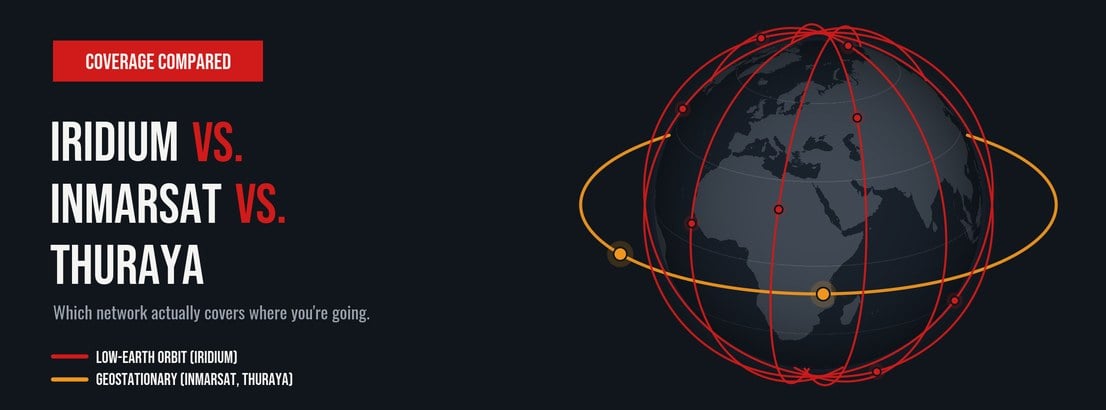
You are anchored in a fjord north of the Arctic Circle. The wind has swung around and the anchor is dragging toward rock. You pull the sat phone out of the ditch bag, power it on, and stare at the screen. No bars. The phone is fine. It just can't see the satellite it was built for, because that satellite is parked 22,000 miles over the equator and the mountain behind you is in the way.
Satellite comms is dramatically advancing, and with the launch of Viasat’s MAX and MAX+ plans, the satellite industry is witnessing a pivotal moment of transformation. Crafted to meet the changing needs of businesses, emergency responders, journalists, and remote operators, these plans prioritize flexibility, cost, and reliability— features extremely important to everyone operating in demanding conditions.