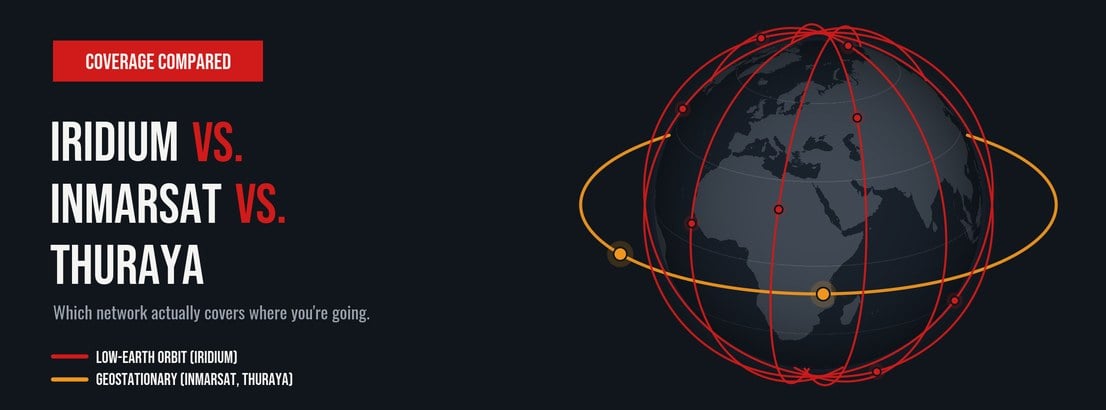
Iridium is 66 satellites in low orbit crossing the poles, which is why it is the network we hand to people going somewhere genuinely remote. Pole to pole, ocean to ocean, no dead zone on the map. This section covers the 9575 Extreme, the 9555, GO! and GO! exec, Certus terminals, and push-to-talk radios. Network status, firmware, plan structure, and the honest tradeoff: shorter satellite passes mean you occasionally wait a minute for a bird to come over.
The map on the box says global. The map that matters is the one over your head at three in the morning.
You are anchored in a fjord north of the Arctic Circle. The wind has swung around and the anchor is dragging toward rock. You pull the sat phone out of the ditch bag, power it on, and stare at the screen. No bars. The phone is fine. It just can't see the satellite it was built for, because that satellite is parked 22,000 miles over the equator and the mountain behind you is in the way.
Alright, let's cut to the chase. When your primary comms fail—and our experience shows it’s a matter of when, not if—your enterprise's resilience hinges on the technology you've proactively deployed. In the critical moments following a disaster, the ability to make a voice call is the absolute lifeline for coordinating response and ensuring employee safety. The two titans in this arena, Iridium and Inmarsat, offer distinct advantages, and understanding the strategic differences is paramount to building a truly resilient communications plan.