0%

When a piece of technology comes along that doesn't just incrementally improve on what came before but fundamentally alters a whole industry (if not the world), it deserves a closer look. The Starlink Mini is precisely that—a device that redefines what it means to be connected - ANYWHERE.
This isn't just another gadget for your tech bag. It's a paradigm shift, a tiny window to a global network that promises high-speed internet almost anywhere on Earth a sliver of sky is visible. But beyond the initial excitement, critical questions arise.
Does it live up to the hype?
Who is this truly for?
And what are the real-world trade-offs for this unprecedented portability?
Let's dive in. We're going to examine the Starlink Mini from every angle—the engineering, the real-world performance, the hidden costs, and its place in a world rapidly filling with low-orbit satellites. This is the deep dive you've been searching for.
Section 1: Deconstructing the Starlink Mini
To truly grasp the significance of the Starlink Mini, one must look past its minimalist shell and understand the technological marvel it represents. It's the culmination of billions of dollars in research, thousands of satellite launches, and a radical rethinking of how data travels. For decades, satellite internet was a last resort, plagued by crippling latency and sluggish speeds. The Starlink Mini, and the network that powers it, has turned that notion on its head.
Beyond the Dish: The LEO Satellite Breakthrough
The secret sauce isn't just the device itself, but the network it connects to. Traditional satellite internet providers like Viasat or HughesNet rely on satellites in geostationary orbit (GEO). These are massive, singular satellites positioned approximately 35,786 kilometers (about 22,236 miles) above the Earth. At this altitude, they orbit at the same speed as the Earth's rotation, appearing fixed in the sky. This makes them easy to connect to, but it comes at a tremendous cost: latency.
The speed of light is finite. A signal traveling from your dish to a GEO satellite and back must traverse a vast distance, resulting in round-trip data times (latency or "ping") of 600 milliseconds or more. For anything interactive—video calls, online gaming, remote desktop work—this delay is a deal-breaker, creating a frustrating, laggy experience.
Starlink operates on a completely different model. It uses a massive constellation of thousands of smaller satellites in Low Earth Orbit (LEO), typically flying between 550 and 1,200 kilometers high. This proximity reduces the signal travel distance dramatically.
-
The Physics of Speed: At a distance of 550 km, the theoretical minimum round-trip time for a signal is approximately t=2×cd , where d is the distance (550,000 meters) and c is the speed of light (~299,792,458 m/s). This yields a time of about 3.67 milliseconds. While real-world latency involves more than just this simple calculation (ground station relays, network processing), it illustrates why LEO latency can be in the 25-60 ms range, rivaling and sometimes beating terrestrial broadband.
This LEO network is what allows the Starlink Mini to deliver an experience that feels like home internet, even when you're hundreds of miles from the nearest fiber optic cable.
Unpacking the Hardware: A Detailed Look at the Specs
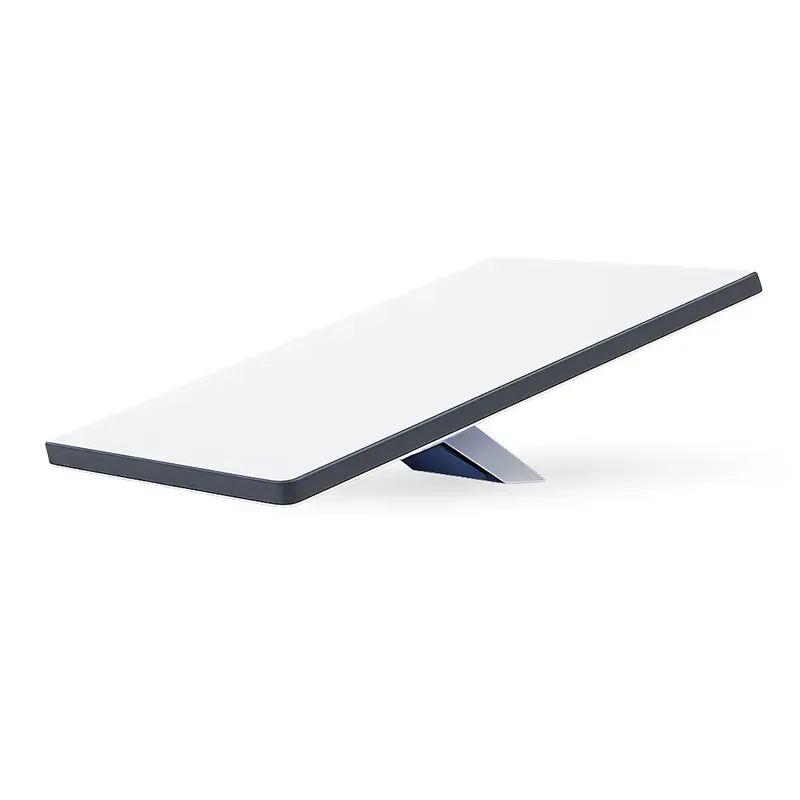
The Starlink Mini is an engineering feat of miniaturization. While the standard Starlink dishes have been shrinking with each generation, the Mini represents a quantum leap in portability. It packs a phased-array antenna, a Wi-Fi router, and all necessary processing into a chassis roughly the size of a thick 15-inch laptop.
Here is a full breakdown of the Starlink Mini specifications:
|
Feature |
Specification |
Implication |
|
Dimensions |
11.8" x 10.2" x 1.4" (298.5 x 259 x 38.5 mm) |
Extremely compact, fits easily inside a standard backpack. |
|
Weight |
2.43 lbs (1.1 kg) without cable |
Lighter than many laptops, making it ideal for backpacking and travel. |
|
Antenna |
Electronically Steered Phased Array |
No moving parts for aiming. The antenna electronically "steers" its beam to track satellites, enabling a low profile and quick setup. |
|
Field of View |
100° |
A decent window to the sky, but requires a clearer view than the larger dishes which have wider fields of view. |
|
Power Consumption |
Average: 25-40 Watts |
Exceptionally low. This is the key feature enabling long-duration use with portable battery packs. |
|
Wi-Fi |
Wi-Fi 5 (802.11ac) |
Provides solid, reliable local network connectivity for multiple devices. It's not the latest Wi-Fi 6/7, but more than adequate for its purpose. |
|
Ingress Protection |
IP67 |
Fully dust-tight and can be submerged in up to 1 meter of water for 30 minutes. This is a critical feature for outdoor and emergency use. |
|
Operating Temperature |
-22°F to 122°F (-30°C to 50°C) |
A robust range suitable for most climates, from cold mountain tops to warm deserts. |
This combination of features, particularly the low power draw and IP67 rating, firmly positions the Mini not as a replacement for a home dish, but as a purpose-built tool for mobility and resilience.
The Power Equation: Fueling Your Connection Off-Grid
The single most consequential specification of the Starlink Mini is its power consumption. Averaging just 25-40 watts, it fundamentally changes the logistics of off-grid connectivity. Larger dishes, which can draw 75-150W, require substantial power stations or vehicle-based power systems for extended use. The Mini, by contrast, sips power.
Let's translate this into real-world endurance with a common portable power station, for example, a 500 Watt-hour (Wh) battery pack:
-
Calculation: Time(hours)=Device Power Draw (W)Battery Capacity (Wh)
-
Starlink Mini (at 30W avg): 30 W500 Wh ≈16.6 hours
-
Standard Dish (at 80W avg): 80 W500 Wh ≈6.25 hours
This difference is quite dramatic. It means a small, manageable battery pack can keep you online for a full two workdays with the Mini, while the same battery would barely last a single day with the standard dish. When paired with a portable 100W solar panel, it becomes possible to achieve indefinite, 24/7 operation in sunny conditions. This low power requirement is not just a convenience; it's the central feature that unlocks most of the Mini's unique use cases.
Section 2: Real-World Performance - Speeds, Latency, and Limitations
Specifications on a page are one thing; performance in the unpredictable real world is another. The Starlink Mini promises a revolution in a box, but how does it actually perform when faced with foliage, bad weather, and the demands of modern internet usage? We've analyzed data from field tests and user reports to paint a clear picture of what you can realistically expect.
Speed Test Chronicles: What Can 100 Mbps from a Backpack Do?
The most common question about any internet service is simple: "How fast is it?" SpaceX quotes speeds for the Mini that are slightly lower than its larger residential dishes, but the results are still deeply impressive for a portable device.
-
Download Speeds: Most users consistently report download speeds in the 100-150 Mbps range. In ideal conditions with a clear view of the sky and low network congestion, peaks can exceed 170 Mbps.
-
Upload Speeds: Uploads are more modest, typically falling between 5-20 Mbps. This is a crucial metric for content creators, remote workers uploading large files, or anyone live-streaming from the field.
-
Latency: On land, latency is excellent, usually hovering between 25-60 milliseconds. This is the metric that makes the connection feel fast and responsive.
But what do these numbers actually mean in practice?
-
Streaming: 100 Mbps is more than enough to stream multiple 4K videos simultaneously. A single 4K stream on Netflix requires about 15-25 Mbps.
-
Video Conferencing: A high-quality Zoom or Teams call uses about 2-4 Mbps for downloads and uploads. The Mini can handle numerous concurrent calls without breaking a sweat.
-
Gaming: The low latency is a game-changer for online gaming. While professional esports players might demand sub-20ms pings, the 25-60ms range is fantastic for casual and even competitive gaming, something utterly impossible on GEO satellite internet.
-
Large File Transfers: A 10 GB file would take roughly 15-20 minutes to download at 100 Mbps. The same file would take 1-2 hours to upload at 10 Mbps.
The performance is not just "good for satellite"; it's good, period. It's a connection that doesn't force you to compromise on your digital life, even when you're miles from civilization.
The Latency Imperative: Why Ping is the Unsung Hero
While download speed gets all the headlines, latency is the true measure of a connection's quality for interactive use. It's the delay, the fractional pause between you clicking a link and the website starting to load. The Starlink Mini's low latency is its most profound advantage over other satellite options.
Imagine a conversation where every response has a one-second delay. That's what using GEO satellite internet feels like for a video call. The LEO-powered Starlink Mini reduces that delay to an imperceptible fraction of a second. This responsiveness is what separates a usable connection from a frustrating one. It makes remote work viable, online education possible, and staying connected with family feel natural, not stilted. This is the qualitative difference that raw speed numbers fail to capture.
The Achilles' Heel: Obstructions and Weather
The Starlink Mini is powerful, but it's not magic. It relies on a direct line of sight to its satellite partners whizzing across the sky. Any object that comes between the dish and the satellite can interrupt the signal.
-
The Obstruction Problem: The Starlink app includes an obstruction viewer that uses your phone's camera to scan the sky and identify potential blockages. The Mini needs a 100-degree cone of clear sky. Even a single tree branch, building corner, or rock face can cause intermittent dropouts. In a dense forest or a narrow urban canyon, finding a clear spot can be a significant challenge. This is the single biggest operational constraint and requires careful site selection.
-
Rain Fade: Like all satellite communications that use high-frequency Ku and Ka-band signals, Starlink is susceptible to "rain fade." Extremely heavy rain, wet snow, or dense fog can absorb and scatter the radio waves, leading to a temporary drop in performance or a complete loss of signal. The system is remarkably resilient in light to moderate precipitation, but a torrential downpour will likely knock it offline. The Mini's smaller size and lower power may make it slightly more susceptible to this than the larger, more powerful dishes.
-
Network Congestion: As more users join the Starlink network, particularly in densely populated areas like North America and Europe, speeds can slow down during peak hours (typically evenings). While the Mini is designed for remote use where this is less of a factor, users in popular RV parks or during large outdoor events may experience reduced performance due to local network congestion.
Understanding these limitations is key to using the Starlink Mini effectively. It requires a mental shift from the "it just works" nature of home internet to a more active process of optimizing your location for the best possible signal.
Section 3: A Family Feud: Starlink Mini vs. Its Siblings
Choosing the right Starlink isn't as simple as picking the newest model. Each dish in the lineup is a specialized tool designed for a specific purpose. The Mini's introduction doesn't make the other dishes obsolete; it fills a crucial gap in the portfolio. Understanding the strengths and weaknesses of each is essential to avoid buying the wrong tool for the job.
The Ultimate Portability Showdown: A Head-to-Head Comparison
The primary trade-offs in the Starlink family are size, performance, and power consumption. The Mini optimizes for the first and last at the expense of the second, while its larger siblings make different compromises.
|
Attribute |
Starlink Mini |
Starlink Standard (Gen 3) |
Starlink Flat High Performance |
|
Primary Use Case |
Backpacking, Emergency Go-Kits, Solo Digital Nomad |
Fixed/Semi-Permanent
|
In-Motion (Vehicles, Boats), Extreme Weather |
|
Dimensions |
11.8" x 10.2" |
23.4" x 15.1" |
22.6" x 20.1" |
|
Weight |
2.43 lbs (1.1 kg) |
~7 lbs (3.6 kg) |
~12 lbs (7.2 kg) |
|
Power Consumption |
25-40 W |
75-100 W |
110-150 W |
|
Typical Speeds |
100-150 Mbps |
100-220 Mbps |
150-350 Mbps |
|
Field of View (FOV) |
100° |
110° |
140° |
|
Weather Performance |
Good (IP67) |
Good (IP54) |
Best (IP56, Snow Melt) |
|
In-Motion Use |
No |
No |
Yes |
|
Hardware Cost |
~$599 |
~$599 |
~$2500 |
The Decision Matrix: Which Starlink Is Right For You?
This isn't just about numbers; it's about your mission. Let's break down the choice with a simple decision framework.
1. Is your primary need true, human-powered portability?
-
YES: You need to carry your internet in a backpack for hiking, field journalism, or solo travel. The Starlink Mini is your only logical choice. Its weight and power draw are in a class of their own.
-
NO: Your "portability" involves a vehicle like an RV, truck, or boat. Proceed to question 2.
2. Do you need to use the internet while moving?
-
YES: You require a stable connection on a moving boat, emergency vehicle, or luxury RV. The Flat High Performance is the only dish certified for in-motion use. Its wider field of view and advanced GPS allow it to maintain a lock on satellites while in transit.
-
NO: You only need internet when you are parked or stationary. Proceed to question 3.
3. Will your dish be a semi-permanent fixture, or will you set it up and tear it down frequently?
-
SEMI-PERMANENT: You're setting it up at a campsite for a week, at a remote cabin for the summer, or as a home backup. The Standard Dish (Gen 3) offers the best balance of performance, cost, and ease of setup. It delivers higher speeds than the Mini and is more affordable than the FHP.
-
SETUP/TEARDOWN: You are moving locations daily in an RV or van and value quick, easy deployment above all else. The Starlink Mini could still be a strong contender here. Its simplicity and small size make daily setup much less of a chore, even if you sacrifice some top-end speed.
For most vehicle-based nomads who don't need in-motion use, the choice between the Standard and the Mini comes down to a simple trade-off: The Standard offers better performance in marginal conditions (thanks to its larger size and FOV), while the Mini offers superior convenience and power flexibility.
The Unseen Competitor: Your Smartphone
In the quest for ultimate connectivity, it's easy to forget the powerful device already in your pocket. For many situations, a modern smartphone with a good data plan and a cellular booster can be a more practical and cost-effective solution than any satellite dish.
-
When Your Phone Wins: If you are traveling primarily in areas with any cellular service, even if it's weak, a cell booster can amplify that signal into usable high-speed internet. This setup is cheaper, uses less power, and has no monthly fee beyond your existing phone plan. But you still somewhat need close range signal.
-
When Starlink Wins: Starlink is for the true "dead zones." National parks, remote wilderness areas, the open ocean—places where no cell tower exists or will ever exist. It's a tool for the gaps in the cellular map.
A savvy traveler doesn't choose one or the other; they use both. The phone is the first line of connectivity. The Starlink Mini is the strategic reserve, deployed when the cellular grid disappears entirely.
Section 4: Real-Life Scenarios and Use Cases
The Starlink Mini is more than a list of specifications; it's an enabler. It grants a new capability to people in a vast array of professions and lifestyles. By examining who this device is for and how they might use it, we can see its true impact begin to materialize.
The Modern Explorer: The Digital Nomad and Remote Worker
For years, the promise of "work from anywhere" has been tethered to the reality of cellular coverage maps. Digital nomads and remote workers planned their travels around towns with decent coffee shops and reliable Wi-Fi. The Starlink Mini severs that tether.
-
Scenario: The Mountain Cabin Coder. An AI developer retreats to a remote, off-grid cabin in the Colorado Rockies for a month of focused work. Each morning, she sets up the Starlink Mini on the cabin's porch, powered by a small solar generator. She has a 120/15 Mbps connection, allowing her to participate in team video calls, push and pull massive code repositories, and run cloud-based machine learning models—all while surrounded by pristine wilderness. Her productivity is untethered from geography. This isn't a fantasy; it's a reality the Mini enables today.
The Trailblazer: The Off-Grid Adventurer and Overlander
This is the audience for whom the Mini feels truly tailor-made. Backpackers, overlanders, RV lifers, and sailors have long juggled expensive, slow, and unreliable satellite messengers or phones. The Mini offers a full broadband experience in a package that can be carried and sustained in the wild.
-
Scenario: The Overlanding Family. A family of four is on a six-month Pan-American Highway expedition in their customized Jeep. Each evening, they set up camp in a remote desert in Peru or a jungle clearing in Costa Rica. They deploy the Starlink Mini. The parents can upload their travel blog videos and manage their finances, while the kids can download school assignments and watch a movie before bed. It transforms a rugged expedition into a connected, sustainable lifestyle, blending adventure with the necessities of modern life. Power management is key here, with their vehicle's solar setup easily recharging the battery pack used to run the Mini.
The Frontline Professional: First Responders, Journalists, and Scientists
Beyond lifestyle applications, the Starlink Mini is a critical tool for professionals operating at the edge. In situations where communication is not a luxury but a lifeline, the ability to establish a high-speed data link in minutes is transformative.
-
Scenario: The Disaster Response Team. Following a hurricane, a search-and-rescue team is deployed to a coastal town where all terrestrial infrastructure—power, cell towers, fiber—has been destroyed. They arrive with an emergency go-kit containing a Starlink Mini and a portable power station. Within five minutes of arriving at their command post, they have a reliable internet connection. They can download high-resolution satellite imagery of the disaster area, coordinate drone flights, and stream live video back to their central office, drastically improving the efficiency and safety of their operation.
-
Scenario: The Field Biologist. A researcher studying glacial retreat in the remote Arctic sets up a base camp. The Starlink Mini allows her to transmit massive datasets from her scientific instruments back to her university in near real-time, enabling faster analysis and collaboration with colleagues around the globe. It also serves as a vital link for telemedicine consultations and staying in touch with family during a months-long deployment.
These use cases highlight that the Mini's value isn't just about convenience; it's about capability, safety, and accelerating the pace of work and discovery in places that have always been disconnected.
Section 5: Cost of "Anywhere": Decoding Prices, Plans, and Total Cost
Owning a Starlink Mini involves more than just the initial purchase. The true cost includes the hardware, a monthly subscription, and the necessary accessories to make it functional for your specific needs. Navigating Starlink's plan structure can be confusing, so a clear breakdown is essential for any potential buyer.
The Price of Admission: Hardware and What's in the Box
The Starlink Mini hardware kit typically retails for $300-$$700 USD in the United States, though pricing varies by region. Inside the box, you'll find:
-
The Starlink Mini Dish: The core unit with its integrated Wi-Fi router.
-
Kickstand: A small, integrated stand for placing it on a flat surface.
-
DC Power Supply: This is the unit that powers the dish.
-
Power Cable and Ethernet Adapter: The necessary cabling to connect everything.
It's a minimalist package designed for quick deployment. However, this is just the beginning of your investment.
The Subscription Maze: Understanding Starlink's Service Plans
The hardware is useless without a monthly service plan. The Mini is designed to be used with Starlink's "Roam" (now "Mobile") plans, which allow for use at any location within your continent.
-
Mobile Regional Plan: This is the most common plan for Mini users. It costs approximately $150 per month. It provides unlimited "best effort" data anywhere on your home continent (e.g., North America). This means your data speeds may be slowed down in areas of high network congestion in favor of Residential users.
-
Mobile Global Plan: For those traveling across continents, this plan costs around $200 per month and offers the same service on a global scale.
-
Priority Data Add-Ons: For users who need guaranteed high speeds for critical applications, Starlink sells "Priority Data" in blocks (e.g., 50GB, 1TB, etc.). This data is not deprioritized and is significantly more expensive, aimed at enterprise and maritime customers. Most Mini users will not need this.
A crucial feature of the Mobile plans is the ability to pause service. You are billed in one-month increments, and you can pause and un-pause your plan as needed. This is ideal for occasional users, such as a hiker who only needs it for a two-week trip or an RVer who only travels in the summer. This flexibility is a major advantage over traditional satellite internet contracts.
The Real Expense: Total Cost of Ownership
To build a truly functional, self-sufficient Starlink Mini kit, you must factor in the cost of power and protection. The $599 hardware cost is just the starting point.
$1,400, plus the recurring $150 monthly subscription fee, represents a significant investment. It firmly positions the Starlink Mini as a professional-grade tool or a serious luxury for hobbyists. The question is not "Can I afford the dish?" but "Can I afford the ecosystem required to support it, and is the capability it provides worth the ongoing cost?" For those who truly need it, the answer is an unequivocal yes. For those who are merely curious, the price may be a powerful deterrent.
Section 6: The Future in Orbit: What's Next for Portable Connectivity?
The Starlink Mini is not an endpoint; it's a milestone. Its arrival signals a new era in personal communications, but the technology is still in its infancy. The competitive terrain is heating up, and Starlink's own roadmap points toward a future where the dish itself may become obsolete for many.
The Dish Killer? Starlink's Direct-to-Cell Ambition
While the Mini is making waves, SpaceX is simultaneously building its successor: a service that connects standard, unmodified cell phones directly to its satellites. In partnership with carriers like T-Mobile in the US, Starlink is activating this "Direct-to-Cell" service on its newer satellites.
-
Current State: The initial rollout is limited to text messaging. This service acts as a safety net, allowing you to send and receive SMS messages from anywhere you can see the sky, filling in 100% of cellular dead zones for texting.
-
The Roadmap: The plan is to introduce voice and data services in the coming years. The ultimate goal is to provide a seamless connection that your phone can use for calls and basic internet browsing when it loses its terrestrial cellular signal.
This technology is a potential "dish killer" for casual users. If your phone can automatically get a basic connection anywhere, the need for a separate portable dish diminishes for non-power users. However, the bandwidth available to a tiny phone antenna will be a fraction of what the Mini's phased-array can achieve. For the foreseeable future, the Mini will remain the tool of choice for anyone needing true broadband speeds for streaming, video calls, or large file transfers. Direct-to-Cell will be for safety and basic communication, while the Mini will be for productivity and entertainment.
The New Space Race: A Crowded Sky
Starlink may have been first to market at scale, but it is not alone. A new space race is underway, with several massive companies building their own LEO internet constellations.
-
Amazon's Project Kuiper: Amazon is investing over $10 billion to deploy a constellation of more than 3,200 satellites. They have already launched prototype satellites and have booked dozens of heavy-lift rocket launches to deploy their network over the next few years. They aim to compete directly with Starlink in the residential, enterprise, and mobile markets.
-
OneWeb: Primarily focused on enterprise, aviation, and government customers, OneWeb already has a functional constellation in orbit. While not a direct competitor for the consumer-focused Mini, its presence adds another layer of competition and innovation to the LEO space.
-
Other Players: Numerous other companies, particularly in China, are developing their own LEO networks.
This intense competition is good for consumers. It will drive down prices, spur innovation in hardware (likely leading to even smaller and more efficient devices), and increase the overall capacity and reliability of global satellite internet.
A Connected Planet: The Broader Implications
The rise of devices like the Starlink Mini is about more than just convenience. It represents a foundational shift in humanity's relationship with information. When high-speed internet becomes a ubiquitous utility, accessible from any point on the globe, it unlocks profound possibilities.
-
Education: Children in the most remote villages can access the same educational resources as those in major cities.
-
Healthcare: Telemedicine can reach populations that have never had access to a doctor, providing consultations and diagnostics remotely.
-
Economic Opportunity: Small businesses and entrepreneurs can operate from anywhere, creating economic growth in rural and underserved communities.
-
Disaster Response: The ability to instantly deploy communication networks will save lives and accelerate recovery efforts.
The Starlink Mini is one of the first tangible artifacts of this connected future. It's a small box that represents a massive leap forward, a tool that not only lets you check your email from a mountaintop but also hints at a future where geography is no longer a barrier to opportunity. The sky, it turns out, no longer belongs to those who can reach it, but to everyone.
Frequently Asked Questions (FAQ)
1. Can I use the Starlink Mini while moving, for example, on a car or boat?
No. The Starlink Mini hardware is not designed or approved for in-motion use. Using it on a moving vehicle is not supported and may void the warranty. For in-motion connectivity, you must purchase the much larger and more expensive Flat High Performance dish and subscribe to a Priority Mobile data plan. The Mini is intended for stationary use once you've reached your destination.
2. How does the Starlink Mini handle extreme weather like heavy rain or snow?
The Mini has an IP67 rating, meaning it is very well-protected against dust and water immersion. However, its signal is still susceptible to "rain fade." During extremely heavy rain, downpours, or when covered in wet, heavy snow, you can expect intermittent service or a complete temporary outage. Performance typically returns to normal as soon as the weather clears. Its smaller size makes it slightly more vulnerable to this than the larger dishes.
3. What is the real-world battery life I can expect with common portable power banks?
This depends entirely on the size of your power bank, measured in Watt-hours (Wh). The Mini consumes about 25-40 Watts. A simple formula is: (Battery Wh * 0.9) / 30W = Hours of Use. (The 0.9 accounts for power conversion inefficiency).
-
Small (100 Wh): ~3 hours
-
Medium (300 Wh): ~9 hours
-
Large (500 Wh): ~15 hours For extended off-grid use, a power station of at least 300-500Wh paired with a 100W solar panel is highly recommended.
4. Are there any data caps or throttling I should be aware of?
On the standard Mobile Regional plan ($150/mo), you get unlimited data. However, this data is "best effort," meaning your speeds may be temporarily slowed down in areas with many other Starlink users (network congestion), as the network prioritizes traffic from Residential and Priority plan users. For the vast majority of users in remote areas, this deprioritization is rarely noticeable.
5. Can I pause my Starlink service when I'm not using it?
Yes. One of the best features of the Mobile plans is the ability to pause and un-pause your subscription. You are billed in full monthly increments, which you can activate whenever you need service. For example, you can activate it on June 5th for a trip, and it will run until July 5th. You can then pause it and will not be billed again until you choose to reactivate it. This makes it very cost-effective for seasonal or occasional use.