A PLB does one thing perfectly. It tells rescuers exactly where you are. It cannot tell them what happened to you.
You are solo on a ridge in the Wind Rivers. You slipped crossing a late-season snowfield, and your lower leg is bent in a way legs don't bend. Your phone says "No Service." Your partner bailed two days ago. The device in your pack, and whether you registered it, decides how the next twelve hours go.
You're 40 miles out. The cell bars went to zero an hour ago. The wind is building from the wrong direction, and you need to reach someone on shore. What happens next was decided back at the dock: which network you picked, which phone you packed, and how much airtime you loaded...
On Thursday, Oct. 29, the FCC voted at its open meeting to move ahead with proposed rules that would open more spectrum to direct-to-device (D2D) service, the technology that connects ordinary smartphones to satellites. AT&T, T-Mobile and Verizon spent the days before the vote asking regulators to pull a big slice of that spectrum out. SpaceX, Amazon and others are building toward it. If you carry a satellite phone, or you're wondering whether you still need one, here's what happened and what it means for you.
Your dish is up, the stream is running, and the truck is buried to the axle. Then the battery dies. Now what calls for help?
Not the dish. The dish is a slab of electronics on a kickstand with no power behind it. The router went dark with it. Your phone still shows full Wi-Fi bars for a second, then nothing. You are forty miles down a forest road, and the only thing that worked out here was the thing that just stopped.
So, is Starlink good for emergencies? Here is the short answer from someone who sells it, uses it, and carries it: Starlink internet is the best off-grid bandwidth most people have ever had. It is not an emergency service. It was never built to be one. Treat it like camp internet and it will make your trip better. Treat it like your rescue plan and one dead battery can leave you with no way to call anyone.
This is a debrief, not a takedown. We want you to buy Starlink. We just want you to buy the right thing to sit next to it.
The map on the box says global. The map that matters is the one over your head at three in the morning.
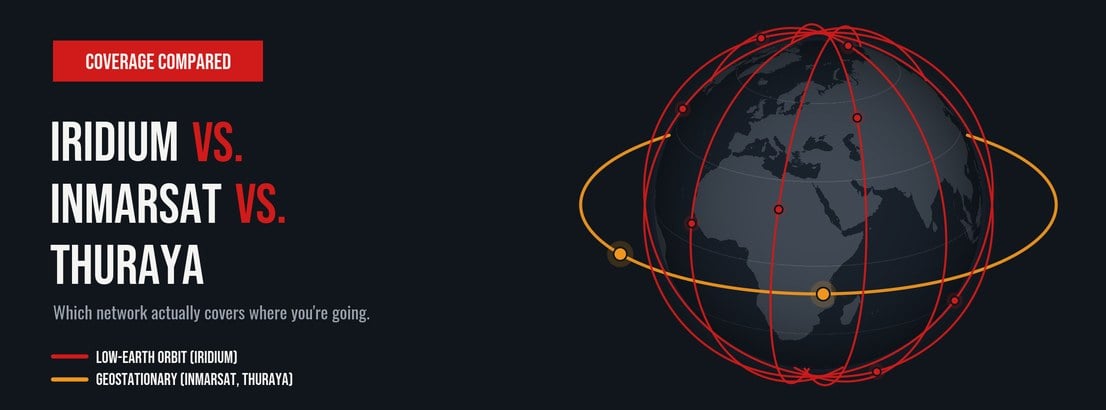
You are anchored in a fjord north of the Arctic Circle. The wind has swung around and the anchor is dragging toward rock. You pull the sat phone out of the ditch bag, power it on, and stare at the screen. No bars. The phone is fine. It just can't see the satellite it was built for, because that satellite is parked 22,000 miles over the equator and the mountain behind you is in the way.
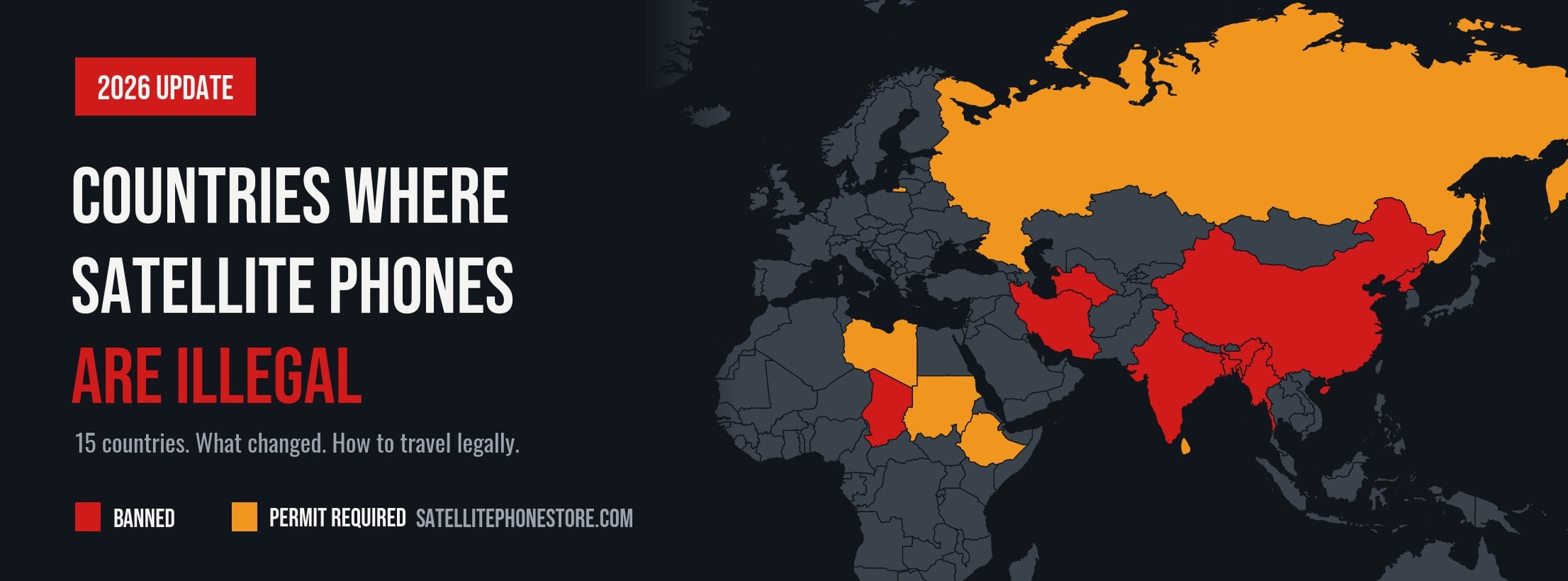
You land in Delhi after sixteen hours in the air. You're headed for the Himalayas, and you packed right: boots, layers, water filter, and an Iridium tucked in the side pocket of your pack in case a trail washes out. The customs officer runs your bag through the scanner. He stops it. He pulls the phone out, turns it over in his hand, and calls his supervisor.
That phone was your lifeline. In India, it's evidence.
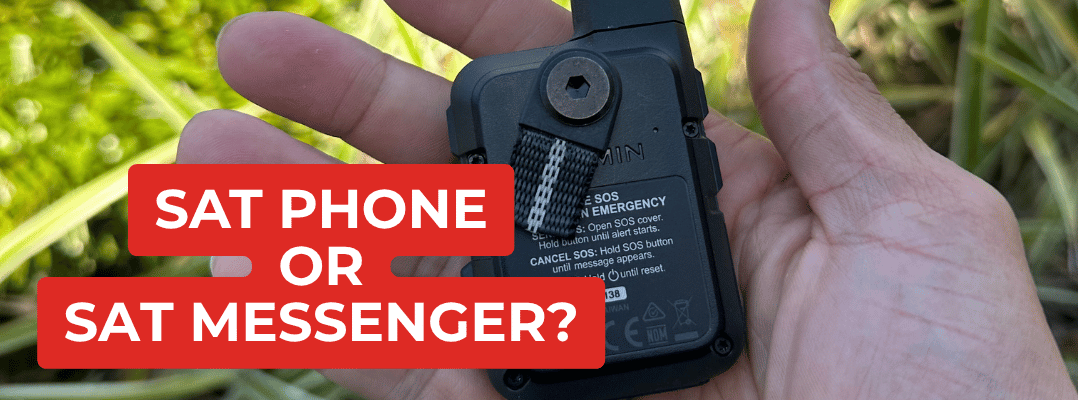
If you’ve researched emergency communication for hiking, boating, or remote travel, you’ve probably run into this question: why pay more for a satellite phone when a Garmin inReach or Zoleo can send an SOS for less?