0%
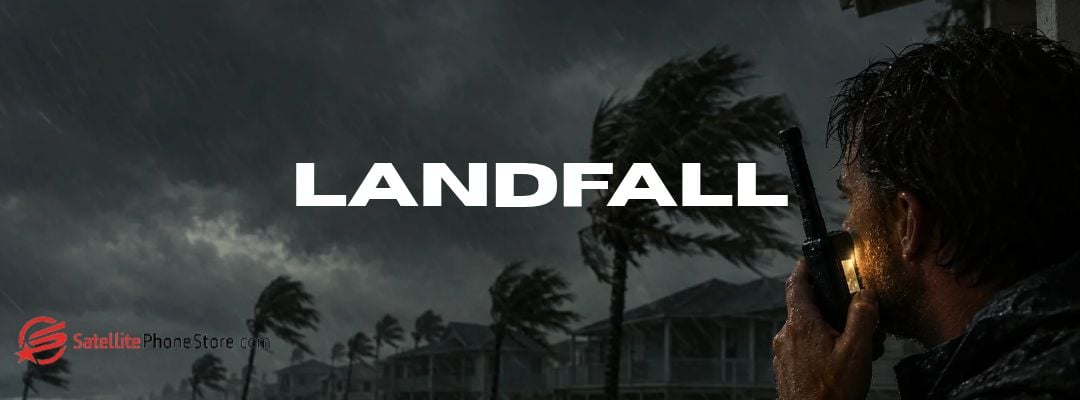
It is 8:30 on a Friday night in the Florida Panhandle. The wind is pushing 105 mph across Destin. The power went out an hour ago, and the cell signal went with it. You have a full battery on a phone that cannot reach anyone.
That was October 9 for a lot of people on the Gulf Coast. And it happened in one of the quietest hurricane seasons on record.
The Atlantic hurricane season officially ends on November 30. By the numbers, hurricane season 2026 has been calm. As of November 1, the National Hurricane Center counts 10 named storms, 1 hurricane and 1 major hurricane. A full season normally brings about 14 named storms, 7 hurricanes and 3 major hurricanes, based on the 1991 to 2020 averages. Forecasters credit El Niño for much of the quiet.
If you are tempted to relax, that is understandable. It is also the wrong lesson. The season's one hurricane was Isaias, and it showed what a single storm can do in a year that looks calm on paper.
The numbers say quiet. Isaias says otherwise.
Isaias became a hurricane on October 8. Over the warm Gulf water it peaked as a Category 3, with winds near 120 mph. It came ashore near Destin, Florida, around 8:30 p.m. local time on October 9 with maximum sustained winds of 105 mph, a strong Category 2, according to the National Hurricane Center.
Then the lights went out. By the next morning, more than 884,000 customers across the Gulf Coast states had no power, according to CBS News citing PowerOutage.us. Roads were blocked, trees were down on lines, and rain totals passed 12 inches in parts of the Panhandle, according to the National Weather Service office in Tallahassee.
One hurricane. Hundreds of thousands of people in the dark. NWS Director Ken Graham called it back in May, when NOAA released its outlook for a below normal year: "It only takes one storm to make for a very bad season."
For a business, a boat crew or a family on the coast, the count of storms was never the number that mattered. The real question is simple. Could you reach anyone when your storm arrived?
What the forecast says about the next few weeks
As of the National Hurricane Center's Monday morning outlook on November 2, there are no tropical cyclones in the Atlantic. Forecasters are watching one area of low pressure that may form a few hundred miles northeast of the Bahamas. They give it a 20 percent chance of developing over the next seven days and expect it to drift out over the open Atlantic and away from land by the weekend.
That is good news, and we are not going to dress it up as anything else. Check the National Hurricane Center directly before you make plans, because outlooks change every six hours.
But a calm map for the Lower 48 does not help people who live, sail or work in the Caribbean. And it says nothing about the other things that take your phone signal away in November: winter storms, flooding, wildfire, grid failures and cable cuts.
The storm is rarely what kills your signal

Most people picture a hurricane snapping a cell tower in half. That happens. But it is usually not the main reason your phone goes dark.
The FCC has found that more than half of cell site outages during the major hurricanes, earthquakes and storms of 2020 were caused by power failures, not tower damage. After Hurricane Ida in 2021, the FCC reported that most cell site outages in the hardest hit area came down to a lack of commercial power. A tower with no electricity is just a tall pole.
Bad weather is not even required. A Government Accountability Office review of FCC outage data found that accidents, including cables cut by backhoes, were the root cause of 74 percent of wireless outages tied to a physical incident between 2009 and 2016. A downed line, a flooded substation or one bad dig can do it on a sunny afternoon.
For businesses, the cost shows up fast. In the ITIC 2024 Hourly Cost of Downtime Survey, more than 90 percent of midsize and large enterprises said a single hour of downtime costs them over $300,000.
Why the end of the season is the right time to prepare
Preparing in a quiet window has real advantages. Nobody is rushing. You can learn the phone at your kitchen table instead of in the dark. And you are not trying to activate service with a storm on the radar.
After a storm hits, everyone who needs a satellite phone needs one on the same day. That is when shelves empty and shipping clocks stretch. Buy while it is calm.
A dedicated satellite phone talks to satellites, not to the local tower, and it runs on its own battery. When the grid and the cell network both go down, it does not care. Our specialist Eric, who has spent 18 years in this industry, has used his in exactly this kind of weather: "The IsatPhone operates in the L band frequency. It's a lower oscillated frequency. I find it works just fine here in Florida where we have some of the worst storms in the world... that phone performs just fine amidst cloud cover and storms."
Iridium phones like the Iridium Extreme run on L band spectrum too. Lower frequencies like L band hold up far better in heavy rain than the higher frequency bands many satellite internet systems use, which is why a handheld satellite phone keeps working when the clouds open up.
Know the limits before you need the phone
We would rather you hear the hard parts from us now than discover them during a storm.
- It needs sky. A satellite phone has to see the satellites. Make calls outdoors or at an open window, never from an interior room or a basement.
- Geostationary phones need the right patch of sky. The IsatPhone 2 connects to satellites parked over the equator. In the United States that means a clear view toward the southern sky. A tall building or a thick tree line on that side can block you. Iridium phones use satellites moving overhead, so they are more forgiving of where you stand.
- It is a voice and text lifeline. It is not a data connection for streaming, and it is not a replacement for 911 or a PLB.
- It pairs well with satellite internet. If you run Starlink, keep it. As Eric puts it, "Starlink provides phenomenal internet, absolutely, but a dedicated satellite phone is built for one core purpose, voice communication when literally nothing else works." When the power is out, a handheld phone with its own battery is often the only thing still talking. We cover that gap in Starlink Isn't a Redundancy Plan.
Customers who work in rough conditions say it plainer. A Florida charter captain who routinely runs 40 miles offshore with no cell service told us: "I highly recommend this to anybody who wants a little reassurance and contact with people on tour."
A short hurricane preparedness checklist before November 30

Alt text: A hurricane communications kit laid out on a kitchen table: satellite phone, portable power station, folding solar panel, waterproof dry bag, spare battery, car charger, flashlight and a card with an out of area contact number.
1. Pick the right phone for the job. For long, steady calls from a fixed spot like a home or an office, Eric favors a geostationary handset like the Inmarsat IsatPhone 2: "I wanna talk for an hour. If I need to not have drop calls, it can be very important." If you travel far from home or work offshore, the Iridium Extreme 9575 runs on the only network that covers the whole planet, pole to pole, and it has a dedicated SOS button you can find with gloves on. Not sure which network covers your ground? Read Iridium vs. Inmarsat vs. Thuraya.
2. Match the plan to how often you will use it. If you only need coverage for a trip or a short window, rent a satellite phone. If you want a phone ready every day of the year, our emergency and prepaid plans keep it live for 12 months. Our Hurricane ON bundles pair an IsatPhone 2 with a year of prepaid service (300 minutes and 900 texts) and an EcoFlow power station with a solar panel, so the phone and everything else stays charged when the grid does not come back.
3. Activate it and test it. A phone you have never turned on is not a plan. Step outside, place a test call to someone outside your area and send a text. Do it again before every season.
4. Charge it and pack power. Keep a spare battery or power bank with the phone in a waterproof bag, plus a car charger if you have a vehicle.
5. Name an out of area contact. Pick one person far from the storm zone whom everyone in your household or crew will call or text. Write the number on paper. Your contacts list lives on a phone that may be dead.
6. Tell everyone where it is. A satellite phone in a closet does nothing for the crew lead who cannot find it. Pick one spot and make sure every adult knows it.
The bottom line
A quiet season is a gift, and the next few weeks look calm for most of the country. The best use of that calm is to do the boring work. Choose a device, activate it, test it and put it where people can find it.
Isaias reminded the Gulf Coast that one storm is enough. The bad day never checks the season totals first.
Not sure which phone fits your situation? A Satellite Phone Store specialist can walk you through coverage, call length and plan terms in a few minutes. We carry the largest inventory in the business, so the gear is on our shelves when others are backordered. Call us 24/7 at 1-877-943-6383 or request a quote.
Preparation is not paranoia. It is the smart move, and it is cheapest on a calm day.
Sources
- National Hurricane Center: 2026 Atlantic Tropical Weather Summary (updated November 1, 2026), Hurricane Isaias landfall update (October 9, 2026) and Tropical Weather Outlook (November 2, 2026)
- National Weather Service Tallahassee: Post Tropical Cyclone Report, Hurricane Isaias (final, October 24, 2026)
- NOAA: "NOAA predicts below normal 2026 Atlantic hurricane season" (May 21, 2026)
- CBS News live updates on Isaias citing PowerOutage.us (October 10 to 11, 2026)
- FCC: Resilient Networks order, Federal Register (November 5, 2021)
- GAO-18-198: FCC Should Improve Monitoring of Industry Efforts to Strengthen Wireless Network Resiliency (2017)
- ITIC 2024 Hourly Cost of Downtime Survey (September 2024)
- FOX Weather, "Late season tropical trouble brewing in the Caribbean amid historically quiet hurricane season" (October 30, 2026)